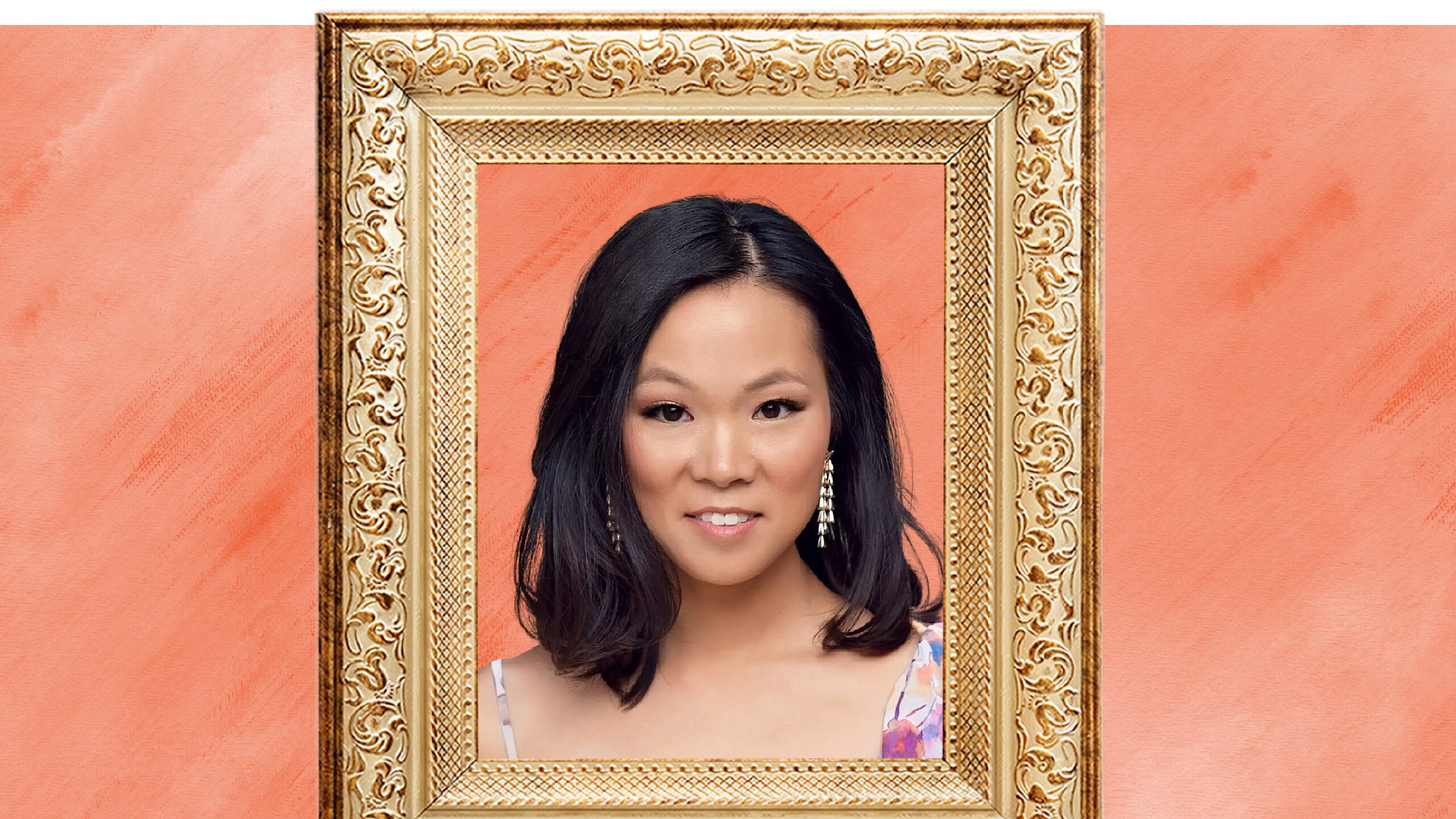
Women’s History Month Feature
PaSH Magazine is celebrating Women’s History Month with a Q&A style mini-series highlighting women from many different industries making an impact in the world, their communities and for themselves. In this Q&A we will spend time with Abigail Hing Wen.
Meet Abigail Hing Wen
Abigail Hing Wen is an author, film producer and director, as well as former tech executive. She is the New York Times best selling author of multiple novels for young people, including Loveboat, Taipei, which has been adapted as the movie Love in Taipei, now on Netflix. Abigail served as an executive producer and on set during production. Her novel Kisses, Codes and Conspiracies, a thriller and romantic comedy novel featuring three teens on the run through the Bay Area, is an instant national bestseller, USA Today bestseller and Amazon Editor’s Pick for YA Book of the Month.
Abigail directed her first short film starring Lea Salonga, a prequel to her New York Times bestselling middle grade debut The Vale, featuring an inventor family that builds an AI generated virtual world. She serves on the board of Harvardwood and is a member of Dan Lin’s Rideback Rise Circle. In 2025, she served as a judge for the Golden Trailer Awards, recognizing the industry’s most outstanding film trailers.
Abigail is a frequent keynote speaker for young people, including Y’Allfest, US Presidential Scholars, and the Los Altos High Writer’s Week, as well as libraries, colleges, high schools and bookstores around the country. She’s also given keynotes and fireside chats for the National Conference of State Legislatures, Meta, Google, Paramount, Paypal and other tech and entertainment companies, and spoken on panels at venues such as SDCC, LACC, LA Times Festival of Books and ALA.
What inspired your latest book & how does it reflect your experiences as a woman in today’s world?
The Vale is a novel about an inventor family who creates an AI generated virtual fantasy world. It came out into the world in September 2025, but I actually wrote it a decade ago, in 2015! Back then, I was raising young kids and working as a lawyer in venture capital and artificial intelligence in Silicon Valley. I saw this powerful technology seeping into the world, under the radar of the vast majority of people outside the Valley. I wanted to democratize access to it as I know it’s here to stay, and believe everyone, young and old, needs to learn to navigate it.
The Vale brings an imaginative, feminine perspective to a traditionally male-led field. As a woman in today’s world, I wanted to show a strong woman-in-tech, Bran’s mom, who is the hardware half of a husband-wife inventor team. She’s built a household of robots who are not just functional, but part of the family. She keeps them well-oiled and polished and even throws on a feather boa for the fun of it. Similarly, the fantasy world of the Vale is a lush place of blue forests, clover fields and a village of adorable elves. So much of tech can feel hard and impersonal, and through the Vale, I wanted to explore how and why technology can be good when it’s built by good people, and with love.
The short film prequel to The Vale, which I directed, provides a similar feminine lens. It centers the story of a second pregnancy and miscarriage — the driving force behind the original creation of the Vale for the Lee’s young son.
Whether it’s a mother building a virtual world to heal her family, or a female filmmaker directing that story for the screen, I wanted to highlight the profound ways women use creativity to navigate both grief and hope.
Were there cultural or societal barriers you faced as a woman author, and how did you navigate them?
I wrote for ten years before I got my first book deal. During those ten years, I had to shelve 5 manuscripts. Like most people, I struggled with imposter syndrome. I never believed I could be an author, because I never saw people writing about the things I knew intimately. A girl going to Taipei to learn her parents’ language and culture — was that a real book? That became my Loveboat, Taipei trilogy and movie. What about three teens on the run through the Bay Area for the cryptocurrencies that had come into their possession? That became Kisses, Codes and Conspiracies.
These books exist today because my wonderful critique partners rallied around me and encouraged me to keep going. They helped me push past the imposter syndrome and realize that the highly specific, nuanced experiences we know intimately aren’t just real books—they are exactly the stories the world needs to read.
How does your work challenge traditional narratives about women, identity, or power?
All my novels center strong, diverse girls and women in nontraditional roles and family structures. My characters find their voices and come into their own power despite their traditional worlds. Loveboat, Taipei features a girl whose family wants her to be a doctor, but who secretly longs to dance. Her strict parents send her from Ohio to Taipei on a program secretly nicknamed Loveboat. There, she encounters her boy-crazy roommate, Sophie Ha, who is there to land a rich spouse, but over the course of the novel, realizes she herself has the capability to make millions of dollars herself. In all my stories, girls speak their minds, they take the lead, they are the center of love triangles and above all, they get to choose.
How do you approach representing diverse voices or experiences in your storytelling?
I draw from my own lived experiences and research. My stories about an Asian American girl’s search for identity. I also think it’s important to have diverse voices not just in front of the camera, but behind it. The lens we apply to our work makes a difference. Having someone who is sensitive to culture means the Lee family kitchen is more likely to have a rice cooker and a hot water dispenser — staples of Asian American households these days. When I’m writing diverse characters outside my personal lived experience, such as Pearl Wong’s non-binary hallmate in Loveboat Forever, I make sure to check their portrayals with friends and sensitivity readers. My hope with my work is to bridge the gaps not just between generations or cultures, but between the deeply human, emotional experiences of my characters and the readers who now get to see themselves reflected on the page.
How do you balance the personal and professional aspects of your life while pursuing a career in writing?
My career in writing has grown in the in-between moments. As a mom to two young kids, I would grab moments of writing time while breast-feeding, in the car during lessons, on the airplanes when traveling for work. On long car rides, I listen to my work-in-progress novel on Voice Dream Reader, which allows me to think about the overall structures and plotlines in a compressed way. I left my corporate job in 2021 when the Love in Taipei movie was greenlit.
But what I found is I don’t generate new material more than 3 hours per day—this is actually standard for many writers. I can edit a novel forever, but the actual writing of and creating new material is limited per day. So I protect those three hours of writing time fiercely. I spend the rest of my day wearing my other hats—whether that’s taking production meetings, master classes, working on advocacy with organizations like Harvardwood, or reviewing film trailers as a judge for the Golden Trailer Awards. The balance comes from letting those different creative outlets feed each other.
On International Women’s Month, what do you hope the celebration of women in literature achieves for current and future generations?
Literature opens our imaginations so we can live in better worlds. I hope that literature that shows women at the center of their own stories, with strong friendship and allies around them, will empower them to live such lives for themselves. My strongest advocate in my time in the tech world gave me the most important piece of feedback I needed at the time: “Be more entitled.” He was speaking in the work context. I shouldn’t be satisfied with lower pay, a smaller role, less acknowledgement for my work. But this applies to all aspects of our lives. Be entitled to a partner who cherishes you. Be entitled to an emotionally and physically safe working environment. Be entitled to respect. Be entitled to the opportunities to take on large projects and big risks. Be entitled to fail, get back on your feet, and move forward stronger and wiser.
Thank you for reading the third installment of the Women’s History Month Features. Come back each day to read a new inspiring story, centering women.
PaSH Magazine is a lifestyle publication. Our slogan is “all your tiny obsessions.” We are strong advocates of self-love, self-care, body positivity and supporting minorities, especially women, people of color and communities not highlighted in mainstream media. Please send pitches to southernpashmag@gmail.com. Please note that we sometimes use affiliate links. If you purchase anything from a link we have provided, we may receive a small commission. This money is used to help support our efforts at PaSH Inc. Check out our sister magazines Explore Georgia Now , Glownoire , plurvylife. and www.redpashmag.com! This article may mention several of our sister brands including but not limited to: Plurvy, Curvy Girls Rock, AYTO, PaSH Publishing and more


